Storytelling in Music: Lyrics that Tell a Tale

This post isn’t going to be a long-winded rant on my favorite artists, bands, and types of music. That would be an unnecessary harangue that is not appropriate at least at this exact moment. This post isn’t even about songs that have cool rhymes or a killer beat. I want to specifically examine songs that tell a tale, direct storytelling that goes beyond bigger themes and metaphors, rather songs that hover in the invisible, out loud pages of a book. A good book to be precise. 

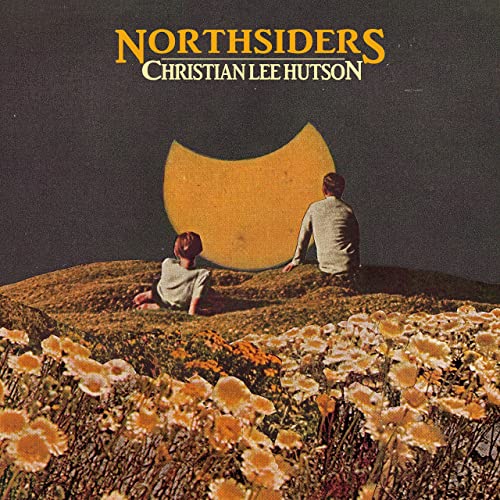
The song that inspired this post is “Northsiders” by Christian Lee Huston. Although in terms of lyrical storytelling I must give credit to the verses of Brittany Howard, Shakey Graves, Florist, and specifically Chance the Rapper’s song from his tiny desk performance titled “The Other Side.”  But once again, if you want to discover more of my music taste I have a list of recommendations, this post is specifically about the dulcet words of Huston in his song. 

Maybe I like this song because I first heard it when I was losing the girl I thought I loved. My favorite verse is the second:

[Verse 1]
I was new in town, kinda goth
I met you in the science quad
You asked if I had any pot
We’re going up to Mikey’s spot
Covering important ground
I tried cocaine in my cousin’s house
Yeah, I’m probably addicted now
The things that children lie about
I didn’t notice it was getting late
You offered me a place to stay
We live up in the palisades
Tell your folks you ran away
Besides, you’re a Northsider now

[Chorus]
Nothing’s going to change it, pal

[Verse 2]
We were so pretentious then
Didn’t trust the government
Said that we were communists
And thought that we invented it
Morrissey apologists
Amateur psychologists
Serial monogamists
We went to different colleges
But you said that we would always be
Branches on the same old tree
Reaching away from each other for eternity
And you know I can’t argue with that

[Chorus]
Nothing’s going to change it now

[Verse 3]
We could have had one last hurrah
When I was working in the smoothie shop
But I couldn’t get the weekend off
She told me I was getting soft
I read an article about the accident
Probably reaching for cigarettes
And missed the brake lights up ahead
I hope it was an instant death
Sometimes I imagine us way down the line
Getting fat somewhere in the countryside
It’s crazy how things shake out sometimes
But maybe that’s enough magic for me

[Chorus]
Nothing’s going to change it now

Anyone who knows me can say that all those lines apply. So is it this blatant connection that induced my affection towards this song, or is it deeper than that? To be honest I don’t really know. Maybe like a busy, plane-filled sky I’ve been so used to a standard flight of songs about heterosexual romance that when this song came along it felt like a spaceship instead. Maybe listening to this song explain my newly developing communist tendencies, my Morrissey apologist posters in my room, my constant analysis of my thoughts with my new psychologist, my 2.5-year romantic break up with a girl who went to a different college; maybe it was as easy as that. Before I knew it the feelings I felt from the tips of my toes to the ends of my dry hair were romanticized into a beautiful song backed up by my orchestral echoes. And at that moment when I first heard this song, I knew that 

Nothing’s going to change it, pal

What I felt was not singular or lonely or isolated. Before I knew it I was listening to my story caress my anxiety away. In a new town, a new story in a new song gave me a new feeling of optimistic hope in myself. My feelings were validated in a way that felt beautiful. And at that moment, I knew

Nothing’s going to change it now.
Netflix’s Dark Tourist and the Myth of Ethical Tourism

Oftentimes we are aware of the unethical nature of something… yet to make the conscious choice to pry our eyes away can seem impossible. In fact, that is pretty much the whole premise of David Farrier’s show Dark Tourist. Farrier goes to different countries and regions in the world to explore the concept of dark tourism, although sometimes his concentration strays from the tourism itself and arrives at the actual content he is examining. As someone who is familiar with post-colonial studies and the brutal effects imperialization has had on countries exploited by the West, I do try to shy away from shows like this. How would you feel if your child’s naked body was being shown on a television show after they were systematically starved and tortured by your local government and the countries that gain power from economic exploitation? How would you feel if your country was summed up in the pictures of a disaster that’s legacy lies in the hands of a singular figure paid off by the CIA? Tourism, whether we like it or not, is a form of imperialization. And as someone who’s intensely interested in geography and geopolitics, it is also important to realize that these travel documentaries, magazines, journalists, these are people or organizations who also contribute to this system of imperialization. Yet it is so hard to find media that takes an anti-colonial and anti-imperial approach to documenting the cultures of other places that I often find myself embarrassingly checking Nat Geo or other groups that make money from the exploitation of countries that have been brutalized by colonialism. Perhaps this is my dark tourist moment.

I caved in and decided to watch Dark Tourists to see if this was finally a piece of media that was more anti-exploitation than the rest. While I certainly enjoyed parts of it, I am also writing this today because it ultimately wasn’t different. Whether it was casual moments where the word “communist” was automatically stigmatized and assigned to governments that were only in shambles because of the US government, or the poverty-porn of showing brown and black kids definitely without their parents’ consent, all of these were still present. There were moments like in South Africa where David didn’t push back at the violently racist people he was interviewing. And while it is undeniable that this is part of David’s strategy, to let the viewer see how blatantly wrong some of the people he was interviewing were, have we not learned through history that it is these moments where we cannot remain quiet? Silence only enables these groups. While we as viewers might understand their malice, how can a white guy like David not even push back a little? There are many other moments of immorality that happened but to not take up all of my time I will reference Sophie Gilbert’s review in The Atlantic linked here. She goes into the specifics of what moments fall flat and sums up my overall point by asking:

“Is that what dark tourism is? An opportunity for thrill-seeking, cash-privileged Westerners to feel better about their mundane lives by trawling through global hot spots of genocide, catastrophe, and authoritarianism?”

I also think a huge flaw of this show lies in the storytelling itself. Oftentimes the ethos of this show gets lost. While the principle of this show is to highlight places of “dark tourism”, David is often sucked up into the concept of the places themselves. Instead of examining why someone would go on a tour about a serial killer, David examines the serial killer himself. While this is certainly interesting, it gravitates away from the show’s premise and can make the overall cohesion fall flat. And while there is nothing I like more in a show than a routined pattern of events, 40 minutes was never enough time to examine the three different destinations David explores. While I applaud the show in their efforts to show a variety of places, I would rather have deeper connections be made with fewer locations. 

David’s show reminded me in some ways of the late Anthony Bourdain. Yet where David falls flat in my opinion, is in recognizing the legacy of imperial brutalization, especially in his field of study: tourism and/or imperialization. This was a show that could have that difficult conversation but it didn’t. As much as I learned some great things I couldn’t help but think that the average person who perhaps isn’t extremely educated in post-colonial studies would unquestioningly trust David’s statements which were oftentimes western generalizations. I hope if there is a second season, David addresses this primary concern. 

Lastly, this show begs me to question not only my own role as a tourist but my own role as a writer who is intensely interested in geopolitics. How do we tell stories of cultures and places that have been brutalized by imperial powers? How do we change our perception of a white-washed way of morality? At least, after watching this show, I have been forced to ask myself these questions.

Storytelling, Fred Hampton, and the OG SDS

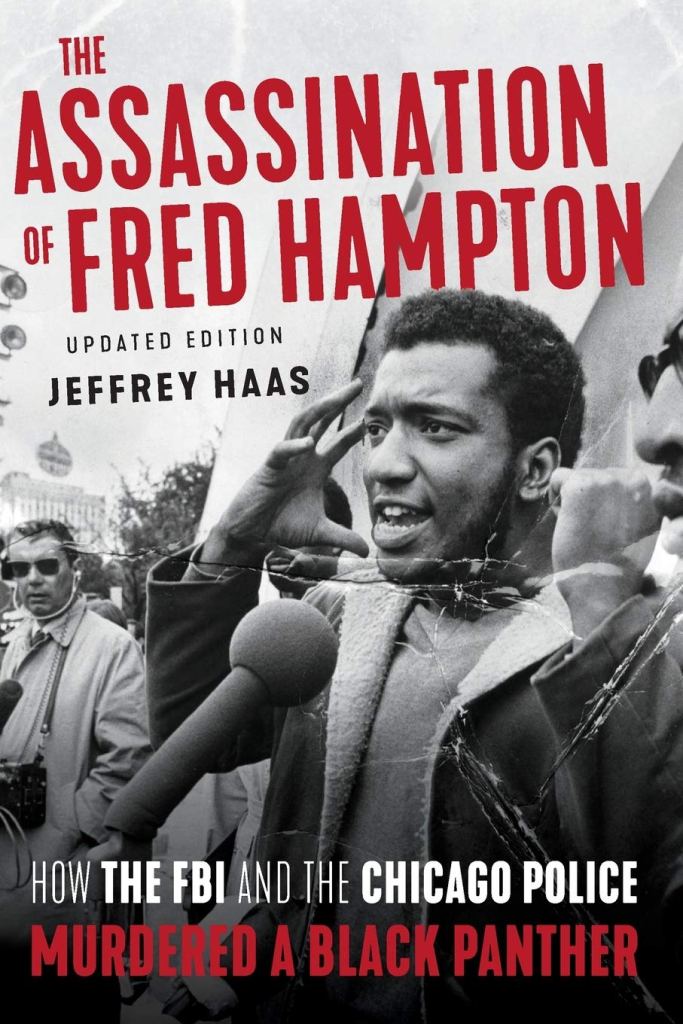
I just finished reading a fairly long book called The Assassination of Fred Hampton: How the FBI and the Chicago Police Murdered a Black Panther by Jeffrey Haas. I received this book as a present and remembered hearing a good review on how this book illuminates the historical context behind the FBI’s role in the political assassination of Hampton. Beyond this complex and detailed history though I also impacted by the role of storytelling in this text. 

What Haas cited and brought up himself so many times throughout the novel was Hampton’s power in communication, in how through his words he was able to communicate to all groups of people the Black Panther Party’s message. Multiple times in times of systemic discouragement, we see Hampton’s successors rise because of his legacy of the will to push forward. Haas offers a unique perspective. As a nonblack, Jewish identifying young man, his experience was already extremely different than the late young revolutionary. Yet I found the perspective of one of the lawyers that fought for Hampton to be incandescently large. So often when we hear stories about fighters like Fred Hampton we are forced to confront how deep and systemic the embedded powers are that viciously murdered him. Hampton’s death isn’t the case of one wild individual’s moment of rage, although you could argue that most moments of cataclysm are akin to broader things too. Hampton’s story is perhaps the clearest example of a system of power that made the choice to murder an individual. And although Hampton is famous for his line:

“YOU CAN KILL THE REVOLUTIONARY BUT, YOU CAN’T KILL THE REVOLUTION.”

Undeniably, the influence behind his death was multifaceted and deeply embedded in the power structures that rule this country. Hampton’s assassination story becomes innumerable by Haas’s political, legal, and systematic knowledge of the rule of law’s clutches on our capitalist, governing institutions. Beyond the moral atrocities, Haas displays the role Hampton can show us in understanding the Untied State’s constitutional laws, government, prison industrial complexes, policing institutions, and Jim Crow/slavery legacies. This then makes the reader not only think about the moral tragedy behind the assassination of one of our best revolutionaries and young man but behind the power structures which enabled it. This is why Haas’s storytelling is so poignant. 

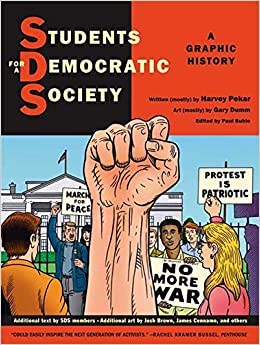
Lastly, the acronym SDS came up in a couple of Haas’s more specific details of his account and I was inspired to learn about my predecessor. So this post today is in honor of the OG SDS: Students for a Democratic Society which on their 1960’s archived website states that they:

“[were] the largest and most influential US radical student organization of the 1960s. At its inception in 1960, there were just a few dozen members, inspired by the civil rights movement and initially concerned with equality, economic justice, peace, and participatory democracy. With the escalation of the Vietnam War, SDS grew rapidly as young people protested the destruction wrought by the US government and military. Polite protest turned into stronger and more determined resistance as rage and frustration increased all across the country” Click here to check out the archived site. 

That’s all for today folks. Power to the people.

The Different Textures Feel Me Grow

About six years ago I started running more seriously. What first started out with slow two-milers evolved into even slower five milers, and then slow 10ks, and then fast 10ks, and then semi-paced half marathons. My love for running doesn’t come from the need to exercise or “stay in shape.” As a college-level basketball player, the training that would help me caps out at around mile number two when it comes to running distances. I don’t run to be the fastest or to win every race I enter. I run because it’s one of the only things that make my body feel completely whole.

My uncle once said that the best runs are the ones with the most textures. He’s completely right. Now mind you I’ve been on some pretty fun runs. A seven-mile route around an island in Maine, up a mountain in New Hampshire, around Amsterdam’s socialist housing projects in the Netherlands, a 5k completely in my Tevas to prove they’re the best sandals out there. My favorite run though is in my own backyard, one that I’ve been going on for six years now, one that I cannot escape. I took my uncle on this exact route one misty Princeton morning. Depending on a couple of detours or alternate routes it ranges between a five to six-mile run, most usually 5.2 miles is what I like to settle with. I took my uncle on this run and after we finished I could tell he was pleasantly surprised. It wasn’t through beautiful forested hills, or across shiny, sparkly creeks, but the textures underneath our feet were infinite, and that honestly sufficed for the both of us.

These infinite textures feel me grow. 

There’s so much literature and theory about the act of watching someone or something grow old. I wonder what it’s like to feel it. 

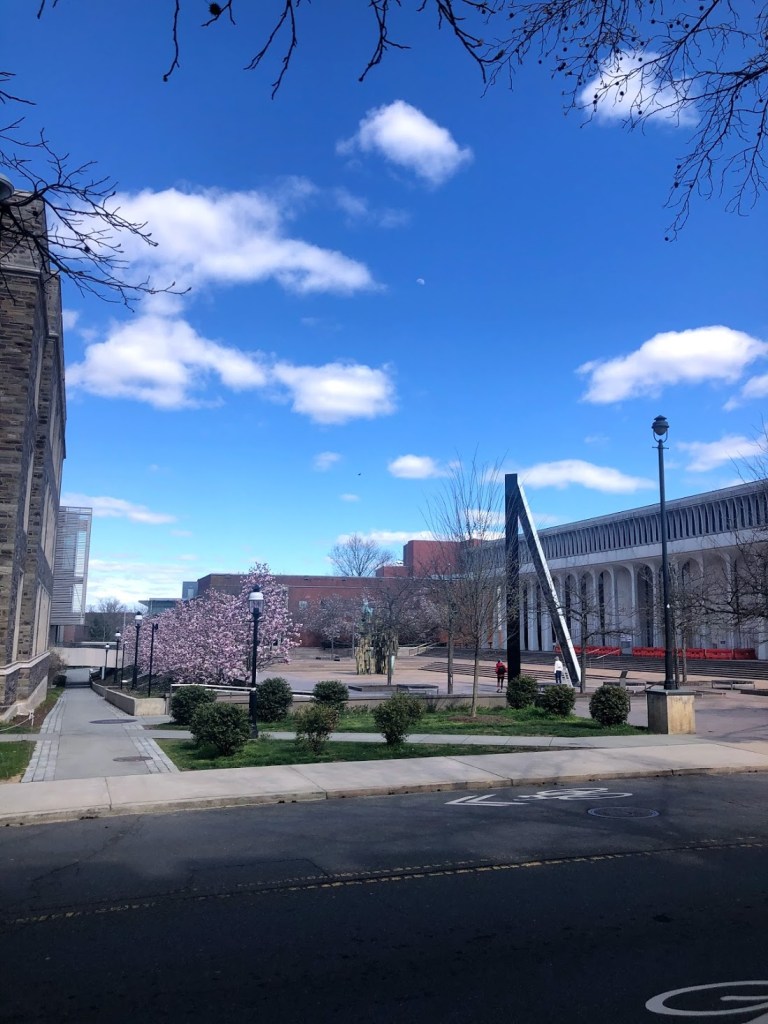
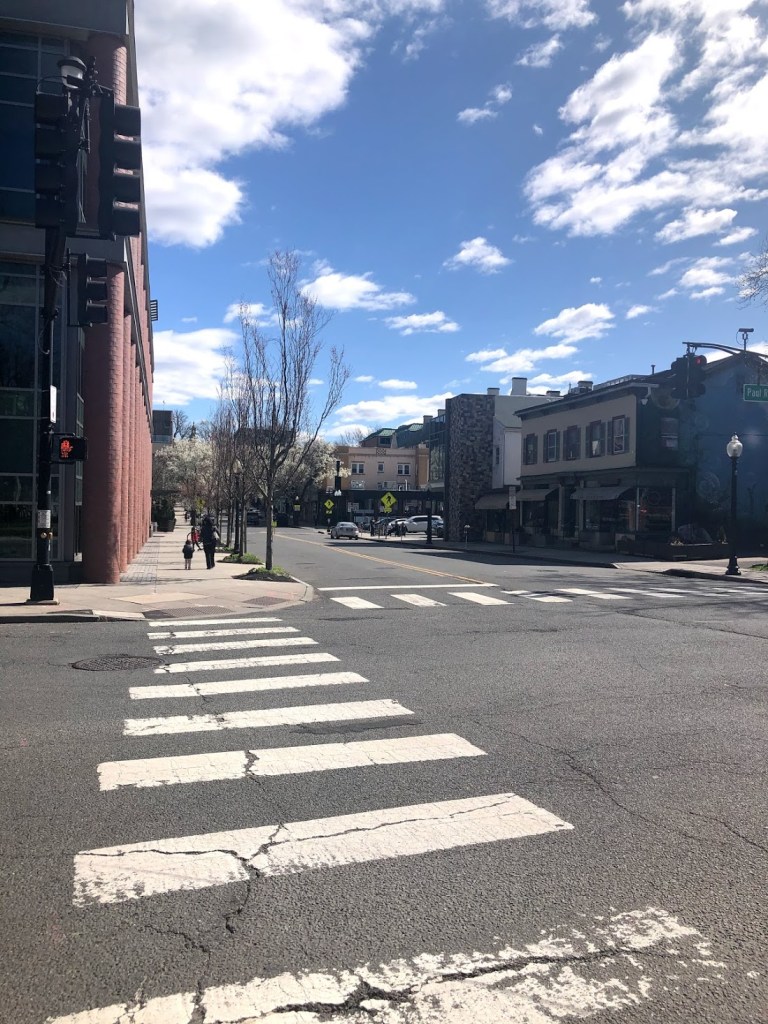
I run on the sidewalk and the tan concrete underneath feels a girl evolve from skinny and finicky to filled-in and stable. I run on the patched-up Jersey roads and it feels long frizzy hair evolves into a more tamed version. I run on the dewy grass and the moisture soaks up my compulsory heterosexuality and spits out a confident lesbian. I run on the University’s winding paths and it feels me no longer getting lost in its twists and turns, rather following this new compass I feel between my ribs. I run on the fine gravel in the secret garden and the flowers feel me moving my lips to different styles of music, as the years go on I don’t get any better at learning lyrics. I run on the bridge across Washington Road and the structure feels my sweat dripping from my brow, my tears dripping from my eyes, my spit salivating out of the corners of my mouth, I guess some things never change. I run under the shade of the chemistry building and the concrete blocks feel my sore joints constantly pounding, confidently pounding, commemorating all the pounds that came before. I run past my high school, my new school, and then my old school, and then my former school, the sidewalk underneath me starts to differentiate the feeling of my feet from the thousands of other teens that traverse it daily. I guess eventually it’s forced to comprehend my adult feet. I run down the hill on Terhune road if there are no cars. The ground feels me sobbing and breathing and sometimes dry heaving. And then when I stop, it feels the endorphins, and satisfaction, and reflection. The ground and textures underneath me know more about me than I really do, or so I believe. The different textures feel me grow. 

Some people like to measure their growing height on the side of a kitchen wall with a ruler and a sharpie. Sometimes it’s hard for me to feel my growth, even after I go on a long run. I do however know that the textures underneath me can feel my growth. Every time I decide to run, to take long strides, to almost fly across their terrain, I am growing.

Frankenstein’s Creation and My Own Creation of a New Self

Perhaps this title is somewhat misleading. I haven’t created entirely a new self per say. Instead, a self that is new because of its liberation from the bounds and restraints from an older identity and version. When I set out to read Frankenstein by Mary Shelley, my goal was to inform myself of her literary power as a newly declared English Major. You have to read the majority of the classics, right? What I didn’t expect to happen was a deeply resonating connection to form: one separate from the majority of themes and symbols scholars take from this text. Knowledge, secrecy, family; are the themes that your senior year English teacher would force you to write a five-paragraph essay on. What I soon became witness to or as I buried my nose into my small and intimate copy was a tale that reflected my own recent events and forced interrogations. As I have newly been liberated from a two-year-long relationship, graduated from my sophomore year of college, been forced to reckon with changes that have broken up my intense love or perhaps just reliance on routine; these are the moments my body has been forced to confront. I saw this creation of a new self in Frankenstein’s own creation, but I also saw the results of a creation that was created poorly. Frankenstein’s creation was created with the motive of scientific discovery and coldness that cannot be mixed with the fragility of humanity, desire, or simply the worldly feeling of validity in a human-created society. A society that regardless of our own monstrosities, cannot be escaped from. While I have not created a new self, a new being, I have been forced to evolve into a body that sometimes feels foreign. This foreignness is something that they do not talk about when they warn you of heartbreak or the task of growing old. 

They do not warn you that when you start to understand the systems that govern our human-based society that includes intense oppression and the violent power structures from those that are wealthy: they do not tell you that when with the education you liberate your questions of morality, that when your liberation comes you will feel like you have moved into a new body. 

They do not tell you that when someone you love becomes the enemy, grabs your affection by its horns, and smashes it out of a window you thought was gale-force winds proof, they do not tell you what your new, post-relationship body will feel like. They do not tell you that as you grow old and learn how to drive comfortably on the interstate that your newly adopted adult muscles will feel oh so different from your ones developed in youth. They do not tell you that in your new body, your old one will feel foreign occasionally. 

Shelley wrote: 

“Even where the affections are not strongly moved by any superior excellence, the companions of our childhood always possess a certain power over our minds which hardly any later friend can obtain. They know our infantine dispositions, which, however, they may be afterwards modified, are never eradicated; and they can judge our actions with more certain conclusions as to the integrity of our motives”

(202).

And now I am realizing that even more than my childhood friend, my childhood self is becoming a witness to this new being. Do I like it? I think so. I know my infantine dispositions are rooted in myself and even my new body will inherit them. But I also know that those dispositions have been plagued by the events and extraordinary moments that have happened all so recently. To me, that is exceptionally powerful, and at least for right now, feels okay. I feel okay as Frankenstein right now because my new creation is still part of me. I am still part of it. I have created a new self but my old self has not been forgotten. I didn’t create this new beginning out of scientific spite, I created or rather evolved into it because I had to. I don’t think late, contingent, creations will turn into Frankenstein’s monstrosity (or what is usually described as monstrous, although one could debate the validity of that declaration). I think I have been ready for this evolution for a long time.

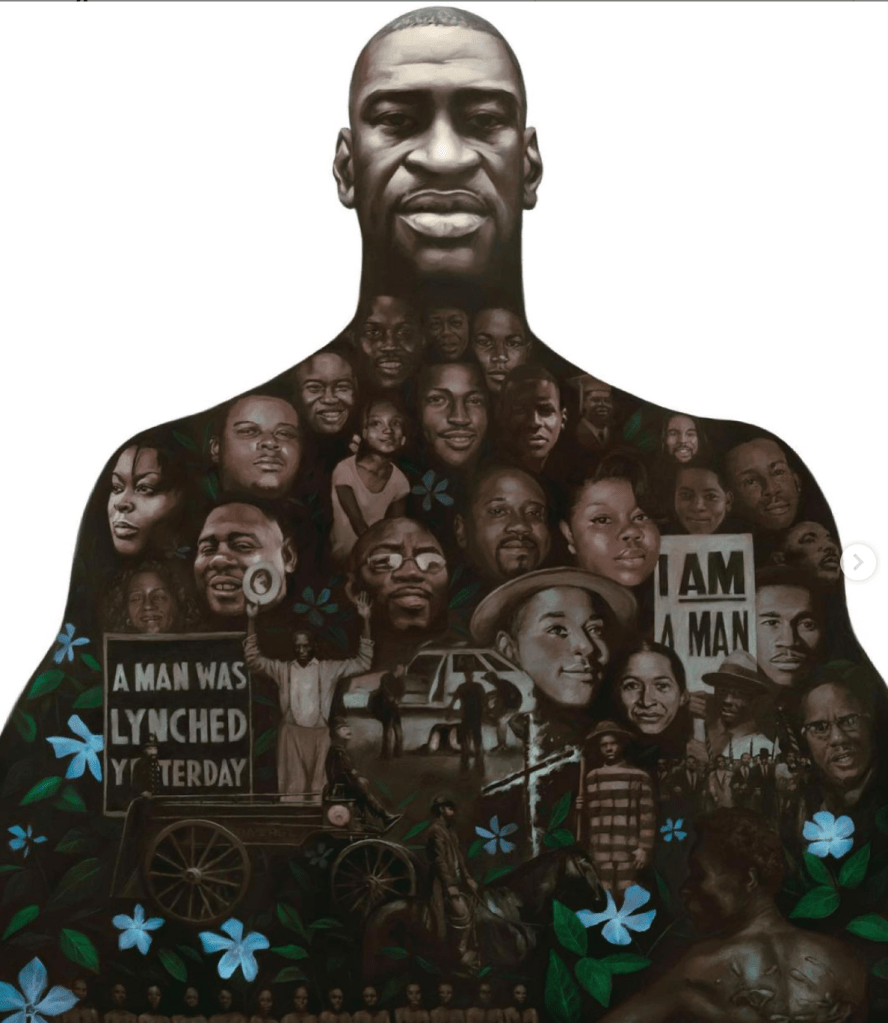
Documenting History: We Held a Murderer Accountable, Today.

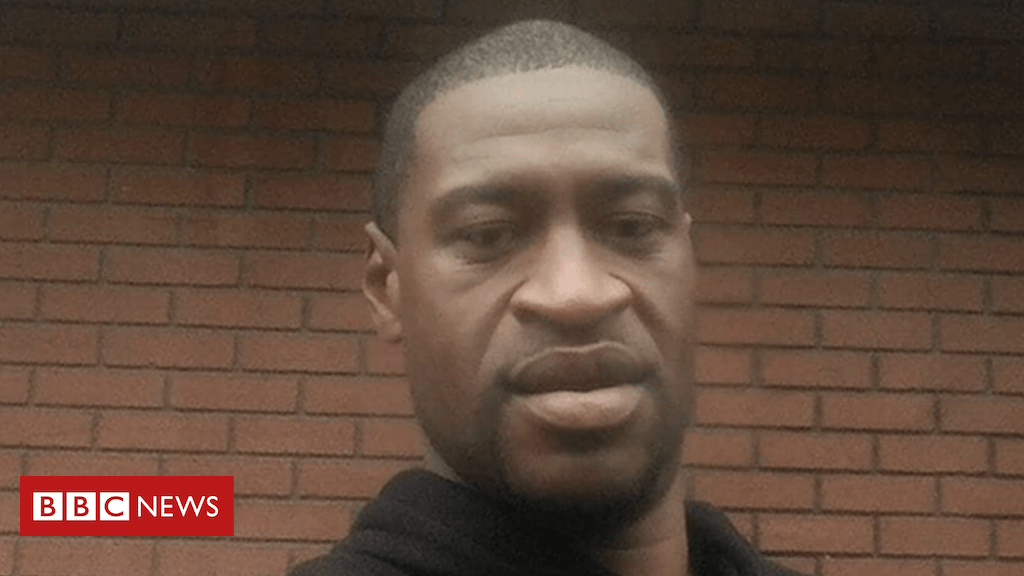
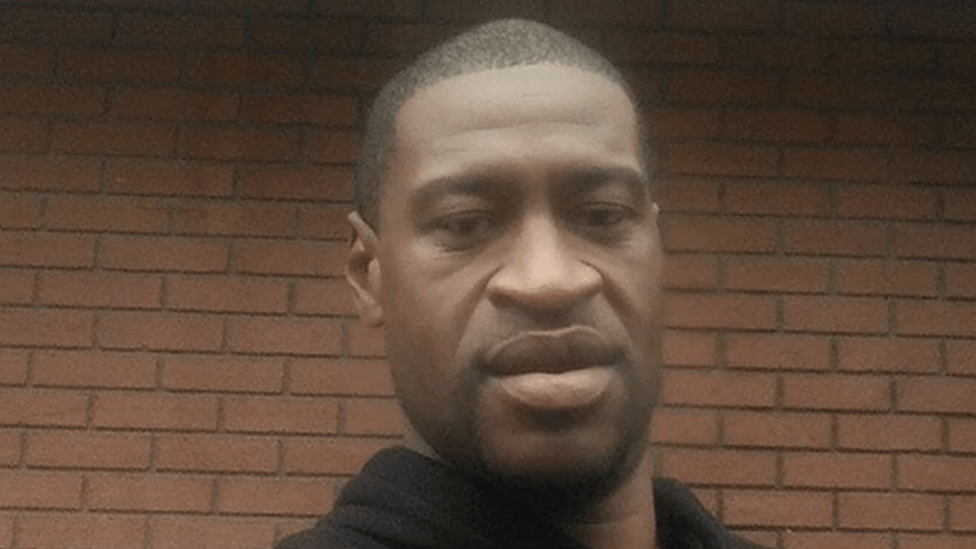
Today the courts and a judge and a jury and the people who protested and got maced and beaten by the police, today was some sort of validation for that I guess. In no way is this a victory or justice. This is just an ending that won’t cause nightmares and PTSD. It won’t teach a whole group of young, black boys not to wear hoodies as Trayvon did. Today was a day where a murderer will have to face his actions. 

In my intense fascination to document history around me as it is going on, I find it important to note today. I want to be able to show the future generation what happened on April 20th, 2021, how hopefully this was the start to recognizing an extensive history of violent racism and systemic police brutality. Hopefully, a day in which the proletariat is encouraged now to come together and overthrow a system derived from slave catchers and cages derived from the fields. 

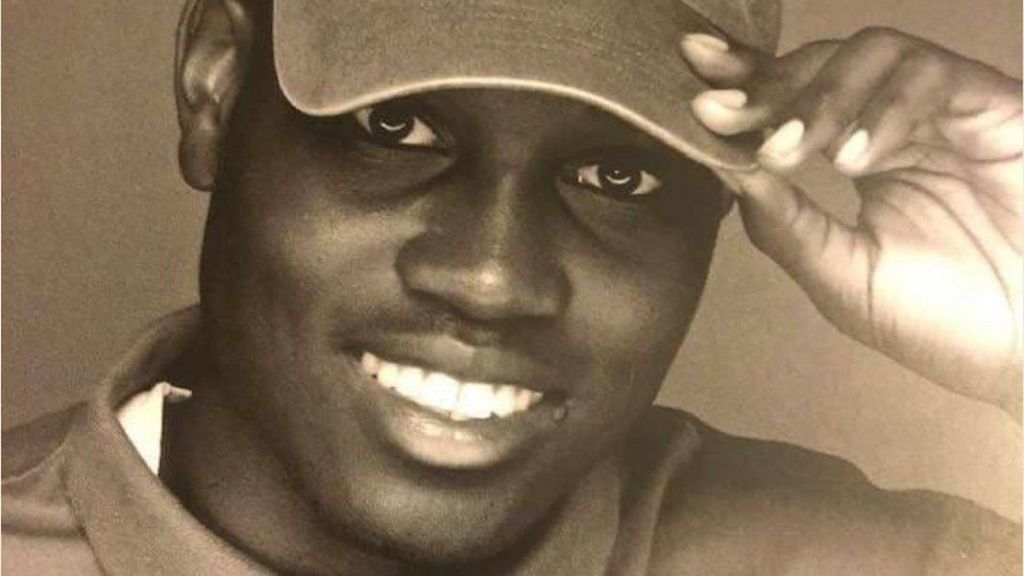
Today we honored George’s name. Tomorrow we still have to fight to honor Ahmauds, and George’s, and all the black and brown men and folks who are murdered by the police. 

And so we fight on.

This Post Was Going to be Selfish

This post was going to be selfish. I was going to write a long story on how I got accepted to be a part of the Midwestern Marx Youth League of Writers. A story of mine got accepted into my school’s Creative Writing magazine. Next Wednesday, I get my second dose of the Covid vaccine. I don’t want to write about that right now. 

I woke up thinking about Ahmaud Arbery today. I ran a couple of races this year dedicated to “social justice.” We’re encouraged to run to “end gun violence”. We’re encouraged to be quiet besides the sound of $100 running shoes hitting pavement and breaths that will never be systematically murdered. That’s enough, that’s all we can do, run and post an infographic on your story. Check it off your to-do list and go back to watching MSNBC at 9:00. Forget Ahmaud’s face, and Daunte, and George. Sit there in your white body, with your black square, and close your eyes to the reality of an existence being attacked by your own apathy. 

This isn’t an eloquent piece of writing that The New York Times would publish. Systemic racism described to fit the right fonts and a peaceful aesthetic. There’s a resolution in this fantasy of course and it involves the white liberal continuing to be… well, a white liberal. 

I have a book about Fred Hampton just sitting on my bed staring at me. Every time I read it I stop because I know I am guilty. Which of course, only makes my guilt more dishonorable and bona fide right? I must admit it took me a whole summer to get through Malcolm X’s autobiography. Sorry, I didn’t mean the phrase “get through” I meant read through, suffered through, looked in a mirror, and saw my own violence through. 

No matter how much anti-capitalist theory I read. No matter what mutual aid I participate in. No matter how much I isolate myself from the white-liberal, I am after all, no different. Inevitably in a week from now, I’ll be posting about my own accomplishments in a society that only runs for me, until the next shooting. I should call it what it is: the next murder of a black child. 

Is this what a stream of consciousness is? Or is this just a confession of guilt? I haven’t been able to write for this blog for a little bit of time. I haven’t been able to stop thinking about Ahmaud. And that’s the concerning part, I’ve started to forget about the rest. The rest that I can distance myself from, the rest that I can’t so easily identify with that they no longer become my problem. I’m starting to forget and I’m afraid. I am starting to forget about Michael, about Trayvon, about Emmett, because today, Adam took their places. 

When you’re sailing a ship you quickly learn that a problematic system won’t do. Unless every line is in the right place, every man ready to raise the mainsail, every halyard set, only then will a ship dance across the water. We don’t have a ship let me tell you. We have an inflatable toy bobbing in an ocean with a rescue boat ten meters ahead saying we’re gonna be okay while we know we’re drowning. A lifeguard with a fear of the water. A fish that doesn’t know how to swim. Unless we get rid of this system in favor of a boat capable of supporting our weight our future is dire. We cannot continue being a capitalistic society. The lifeguards will keep joking around and we’ll just keep sinking. 

I look to the left of me and see sharks grabbing feet. People are being drowned and now I think at least I am lucky that I have this little bit of plastic between me and the sea. Sharks will keep on grabbing and incapable “lifeguards” will keep on laughing until we get hardwood underneath.

John Masefield wrote

“And all I ask is a tall ship and a star to steer her by.”

And all I can do is work to dismantle this system. To get rid of the plastic and protect my friends from the sharks. To be rescued by a ship with strong lines and a sturdy deck beneath. 

Whatever this is, this is for Ahmaud, and George, and Daunte, and all the other black folks murdered by the police. I’m sorry.

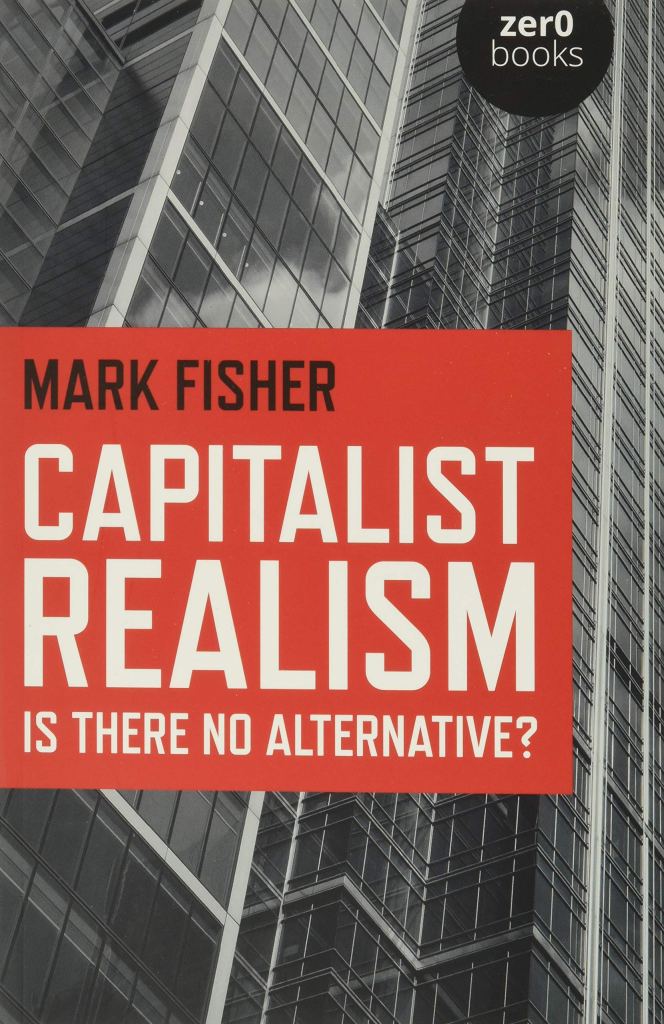
A Brief Book Review: Capitalist Realism: Is There No Alternative? By Mark Fisher

This book is sort of like the modern-day Communist Manifesto. Short, but every sentence carries a vastness of ideas, constructions, and theories that make your head spin. Much like parts about Capital stuck out to me when reading Marx, there definitely were some points that stuck with me more, although I do confess this book is one you must read more than once. Since Fisher’s words and sentences and ideas are extremely dense, instead here are some quotes that were oh-so sticky. (I will only write four quotes so that I don’t end up quoting the whole book itself)

“So long as we believe (in our hearts) that capitalism is bad, we are free to continue to participate in capitalist exchange. According to Žižek, capitalism, in general, relies on this structure of disavowal. We believe that money is only a meaningless token of no intrinsic worth, yet we act as if it has holy value. Moreover, this behavior precisely depends upon the prior disavowal we are able to fetishize money in our actions only because we have already taken an ironic distance towards money in our heads”

(13).

“Capitalist realism insists on treating mental health as if it were a natural fact… But what is needed now is a politicization of much more common disorders … Instead of treating it as incumbent on individuals to resolve their psychological distress, instead, that is, of accepting the cast privatization of stress that has taken place over the last thirty years, we need to ask: how has it become acceptable that so many people. And especially so many young people are ill? The ‘mental health’ plague in capitalist societies would sunset that, instead of being the only social system that works, capitalism is inherently dysfunctional, and that the cost of it appearing to work is very high”

(19).

“If memory disorder proves a compelling analogy for the glitches in capitalist realism, the model for its smooth functioning would be a dream work”

(60).

“Instead of saying that everyone – ie every one – is responsible for climate change, we all have to do our bit, it would be better to say that no-one is, and that’s the very problem The cause of eco-catastrophe is an imperial structure which, even though it is capable of producing all manners of effects, is precisely not a subject capable of exercising responsibility. The required subject – a college subject – does not exist, yet the crises, like all other global crises we’re now facing, demands that be constructed”

(66).

This book provides a straightforward answer to capitalism’s multi-dimensional problems. Yet in a way, the book is also a juxtaposition: it is so simply put which makes it so hard to understand. Since every word and sentence means so much, it is of its utmost value, it is easy to overlook its brilliance. In some sections I found myself thinking I could refer this book to the young comrade as a beginning text in their journey, other times I found that it was too early for me to be reading this book in my journey to liberation through education. So if you decide to read this book put on your reading glasses and be ready. Be ready to coast through a roller coaster full of ups and downs and moments that will hurt your body. Exhilarating liberation but also times of deep contemplation. 

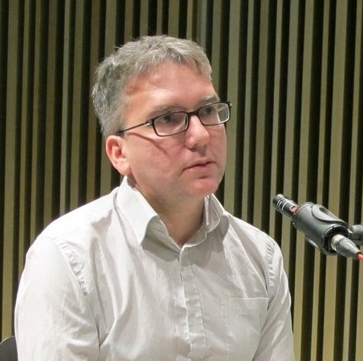
In memory of the late Mark Fisher

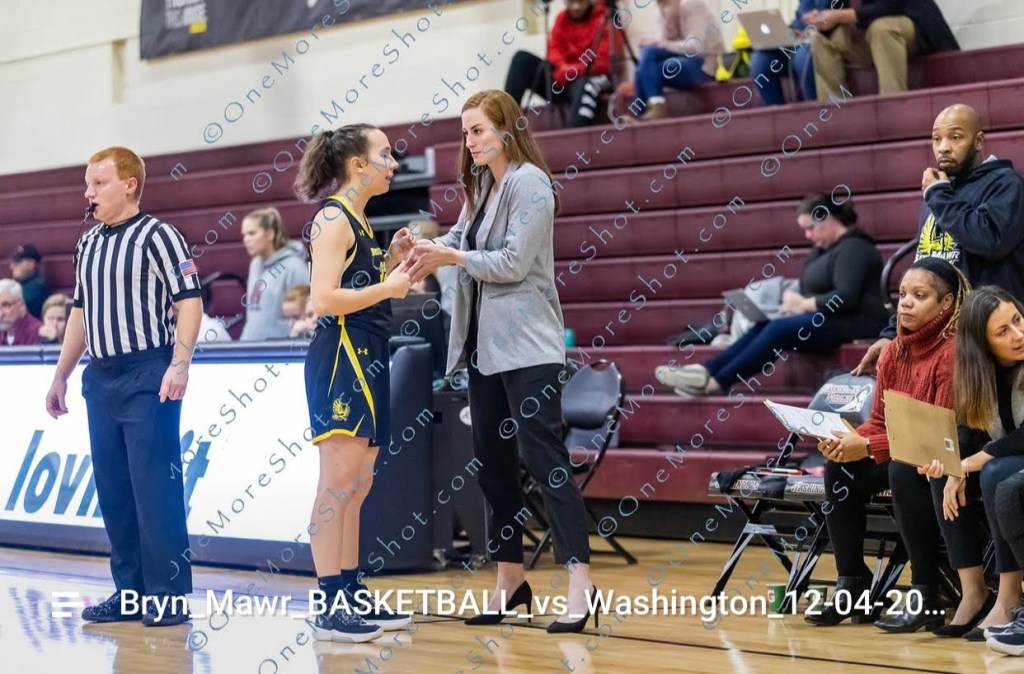
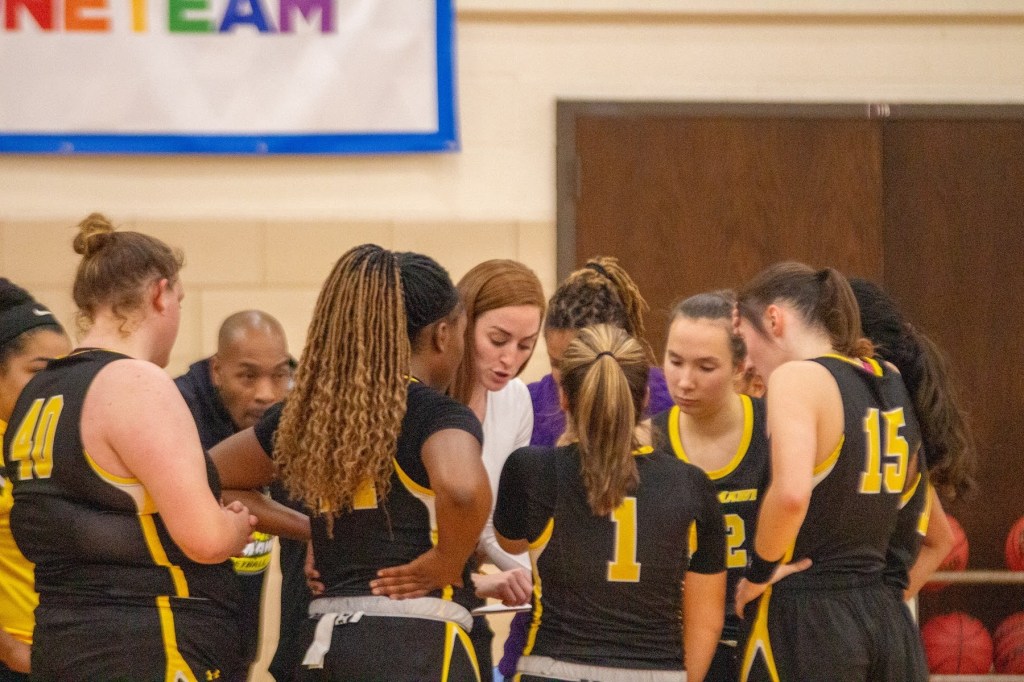
Becky Tyler’s Eight Years as the Women’s Basketball Coach at Bryn Mawr College: “There’s Still So Much to be Grateful For”

I knew Bryn Mawr was the place I wanted to be about four months into 2018. Five months prior if you had told me I’d be attending Bryn Mawr College, I would ask you how do you spell that? Where in the world is it even? And it’s a historically women’s college?

Bryn Mawr was that perfect fit that they always tell you about, I had what you could call -the feeling- and logistically it made perfect sense. Most surprisingly, my basketball ambitions seemed plausible and the coach even seemed really nice! As I sit here writing this, a week away from turning 20, I am amazed by my innocence but in awe of my confidence. I didn’t think the choice I was making would lead me to come into contact with one of, if not my biggest role models in life. I didn’t think I would form an intrinsically personal and liberating relationship with my teammates. We’re bonded by basketball and school-wide tradition that has provided me with a literal family (I have a mom, siblings, and aunts now). Everyone asked me before I came here what it would be like to play on a team who would likely lose 20+ games in our season, I responded with the idea that as long as I was having fun it didn’t matter. And I wanted to believe that was the truth, so when I was proven right, I realized I had really found a home here.

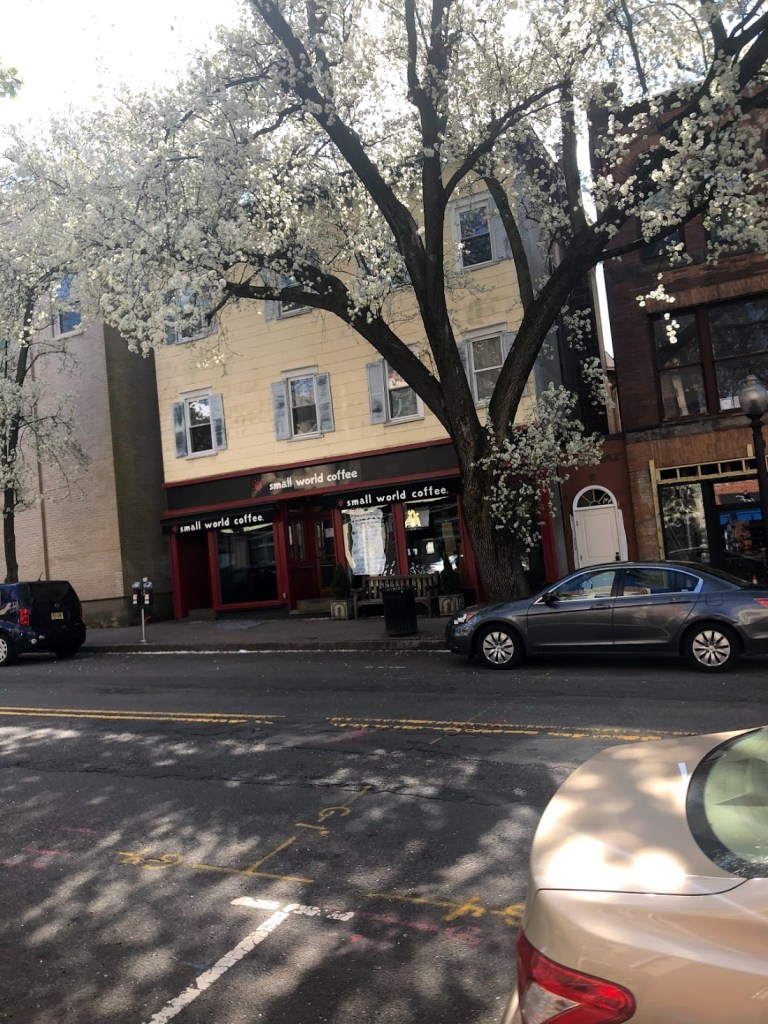
Everyone knows Coach Tyler on campus. A couple days after I got accepted into Bryn Mawr, I grabbed some coffee in my hometown, Princeton NJ. A nice looking twenty year old came up to me and smiled at my Bryn Mawr shirt. She told me she had just graduated and that I was going to absolutely love it. We started talking more and eventually I explained that I was going to be playing basketball there too. I remember how she immediately smiled and said, oh you’re the luckiest out of all the athletes, you get the best coach. She’s like this tall, pretty model that I always see working out in the fitness center and all the other athletes wish that she was their coach. A good omen I suppose.

We have this ongoing joke on the team that if you have a bad day you just go to Coach’s office to sit and cry for a little bit. You tell her about all your life’s struggles and then you come out feeling a lot better. There are countless times where Coach has had to comfort her distressed, and oftentimes extremely sweaty players, but she never bats an eye. Coaching a group of developing young adults is one thing, caring for them on a deep and personal thing is another. Somehow, in times where we didn’t even know where we’d be living in the upcoming week, COVID has really hit us all, somehow Coach always had a way to make everything seem okay.

When I think about my own personal relationship with Coach Tyler the biggest thing that stands out to me besides her unconditional kindness and care, is the confidence and trust I know she has for me. As young women we’re already taught not to think highly of our skills and identities, and having suffered from the derogatory and occasionally manipulative coach in high school, my confidence in my ability to play the game of basketball was at an all-time low. With Coach though, that was never apparent. Coach never questioned the validity of my skill, she never questioned my work ethic or my capability to try as hard as I possibly could. Instead Coach used those times where I struggled, those times where my tears required a sweaty pat on the back, she used those moments of my vulnerability to instill a level of confidence and safeness I had never felt before. I know for a fact that I’ve turned from an introverted, soft spoken girl to a confident and opinionated person who isn’t afraid to take charge anymore. I very rarely question my skill because Coach Tyler as a basketball coach has taught me that life is so much bigger than the 91 feet of hardwood floor. 

That’s the irony. I feel like so many of the lessons that Coach has taught all of us apply to our lives off the court. Coach cares so deeply about not only who we are as players, but who we are as moral and ethical human beings. She cares about our significant others and is there for us when a parent falls ill. She checks in with us in times of social-unrest and discrimination, she holds space for those hard conversations and requires deep and intellectual investigations and educational experiences as a team. We have read books about segregation in college basketball and we’ve talked about the importance of taking a knee during the national anthem. We’ve had those hard conversations and we’ve challenged each other at times, we’ve challenged our preconceived ideas and notions to grow together as a family.

When Coach told us she had to leave Bryn Mawr I knew it was going to be tough. What I didn’t expect was the vastness and intensity in emotions that everyone on campus would be experiencing. Even those that had never met her were grieving her departure, and were supporting their friends who shed a couple tears. I feel that this is one of those situations where we won’t even understand the true scale of the impact Coach has had on this campus until she is gone. 

In my intense fascination to document history before it escapes our memories I realized that before Coach left, I needed to sit down and do this interview with her. In perhaps my last trip to her office I headed down to the gym hoping that no tears would come. As we talked about her time here it was obvious how much of an impact Coach’s time here has had on her. I like to think that Coach knows how much of an impact she has had on all of us.

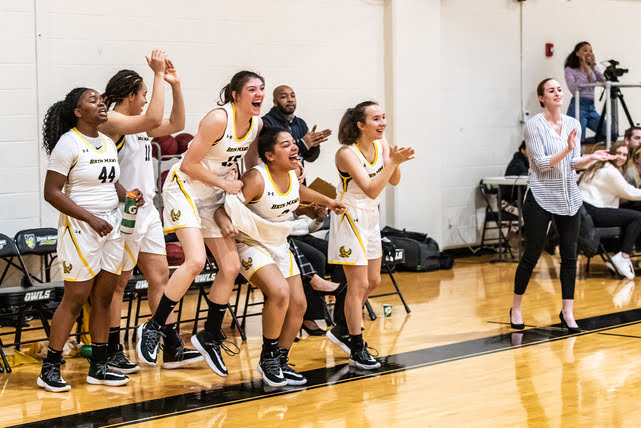
When I asked Coach what her favorite memory here was, her first response was immediately about an ameautur player who scored her first points in a hard-fought game a couple seasons ago. This girl, like so many of us, must have found a connection with Coach, and even though she was inexperienced in the game of basketball, she wanted to be a part of the team. Coach told this story like she was retelling her own 1,000th point memory. She explained that when the player scored everyone on the team celebrated together. That unity is something that Coach has instilled on our team, a value I hope we never lose.

It’s been a tough year, it’s been a really tough chunk of time in human history. Yet Coach’s unwavering optimism in her view of the future of course remains high. Coach reminded me towards the end of the interview that

“There’s still so much to be grateful for”

I hope that as my teammates and I confront our uncertain future we remember that and honor the legacy Coach has left us. If we strive to not only be players, but be humans like Coach Tyler then I know our future is hopeful.

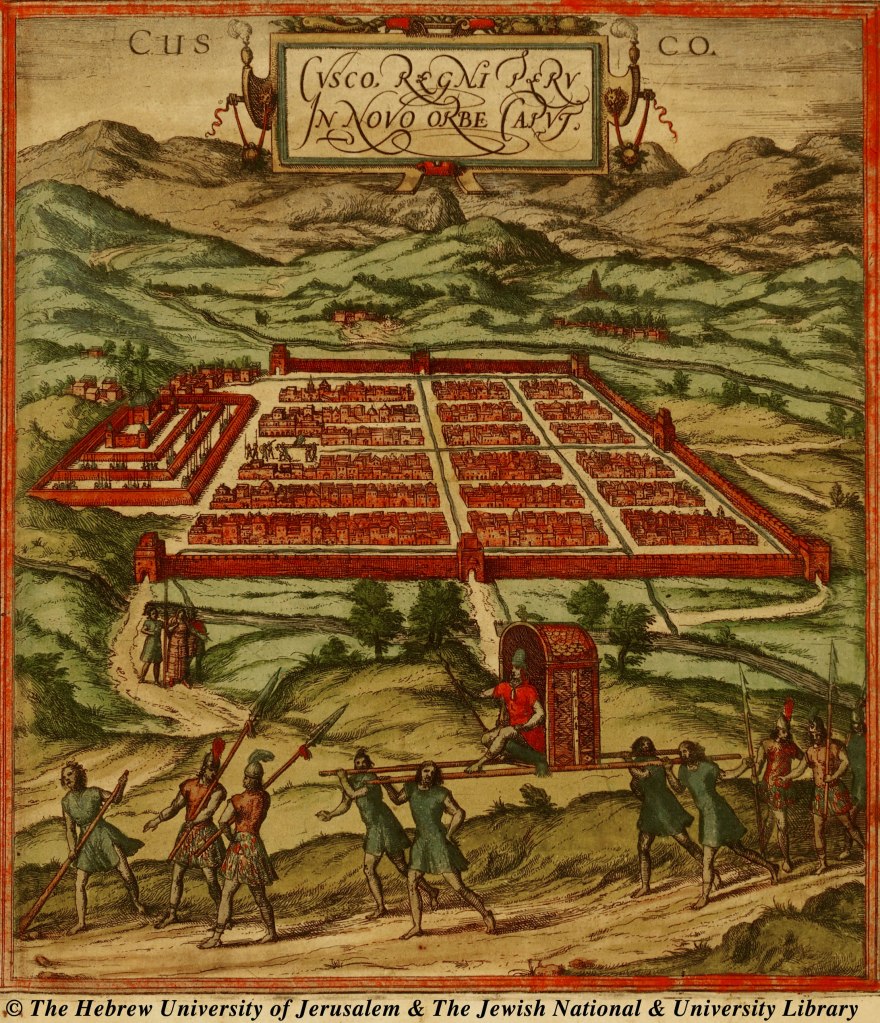
Map of the Day: Cusco/Cuzco Peru

Today my “Form of the City” class was picking and looking at maps. I picked a map of Cusco that (1572, Braun and Hogenberg, Civitates Orbis Terrarum, map I-58) that seemed relevant to a lot of what I am interested in. I’ve been to Cuzco and was fascinated with the juxtaposition between Incan/Andean architecture and Spanish Imperialized architecture. Most importantly perhaps the mesh between the two: the physical intersections were quite poignant actually. I enjoyed looking at this map and I hope you do too.